

How Bioengineering Will Help Save the Planet
Why we need synthetic biology to help supersede industrial production and join with clean energy technologies to ultimately solve climate change too

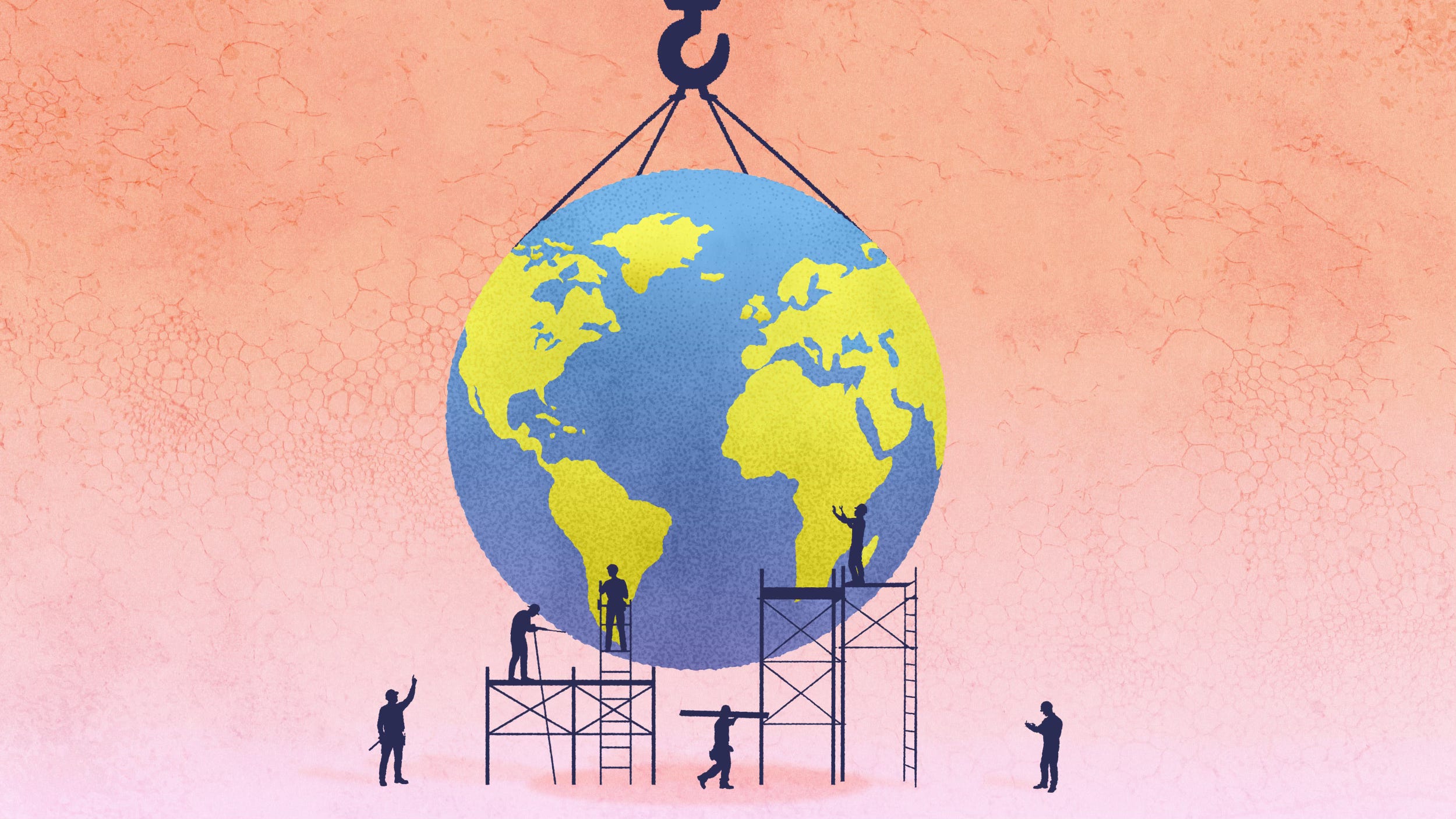
The start of the Bioengineering Age is a very big deal for everyone on Earth, and not just because of its potential to improve human health. In the long run, the arrival of advanced bioengineering technologies will help make this planet truly sustainable, too.
The world of biology is going through a transformation that is every bit as profound as the ones kicking off the AI Age and the Clean Energy Age. In fact, what is going on in this field is very similar to what is going on in those other two fields: They each have crossed an engineering threshold.
The arrival of AI has turned intelligence into a technology. For all of human history, intelligence has been housed in complex, mushy brains that we still don’t really understand — let alone know how to engineer. Now we have machines that are intelligent. That means intelligence can start to do all the things that technologies can do: scale up in scope, drop down in price, and keep getting better and better.
The same thing happened in the world of energy. For all human history, energy was a finite commodity — we collected fuel and then burned it. But then we figured out how to use technologies like solar cells to tap into near-limitless sources of energy. Now that energy is tied to a technology, we can keep up the engineering process to make it better and cheaper. Solar and wind power are already cheaper than electricity generated by carbon commodities — and are going to keep getting cheaper still.
For all of human history, biology — the processes that power our bodies and all other life forms — has been this fantastically complex thing. We barely understood life, let alone knew how to engineer it. But in the last few decades, that has changed. We increasingly do know how living things work. In fact, we’ve gotten far enough down that road that we can start to directly engineer living things using biotechnologies. Now we can do with those what we do with other technologies: make them better and cheaper over time. We’ve always lived with biology, but now we are going to live with bioengineering.
Bioengineering will play a key role in transforming the world for the better over the course of the next 25 years — I call this upcoming period The Great Progression, and it’s the subject of my next book. Some of these breakthroughs will be in the world of human health. When most people think about biology, that’s the space they default to, and we can expect to see profound changes in it in the Bioengineering Age. We will shift from reacting to periodic illness to predicting and managing our health. We won’t just have more targeted medicine when we’re sick, but much more personalized healthcare that will help us live better and longer.
Just as important as human health, but much less discussed, is the use of biotech to engineer the rest of nature. As we learn more about how the human body works — and how to engineer it to work better — we’re simultaneously learning more about how all living things work. We can apply our new insights into how human genes, cells, and proteins work to plants, animals, bacteria, and viruses — and vice versa, for that matter. In fact, we will be much freer to engineer non-human organisms than humans given all the ethical and regulatory obstacles to experimenting on people.
Advanced biotech tools will allow us to manipulate agriculture in a much more efficient, high-tech way. We will be able to directly genetically engineer desirable traits into crops and animals — something we’ve pursued for decades through much less precise, much more labor-intensive processes like selective breeding. Then there’s synthetic biology, an advanced branch of bioengineering where we program organisms to do things they’ve never done before, creating traits evolution never reached.
This ability opens up countless possibilities — perhaps we’ll bioengineer construction materials that are cleaner than the ones we currently use. The ultimate goal will be to replace dirty industrial production with clean bioproduction as much as possible, helping address our mounting environmental problems.
The many pros and cons in the old system of industrial production
The amazing technological advances and price drops in clean energy technologies over the last 15 years hold the promise that humans may be able to turn the corner on climate change. But even if we transition our energy infrastructure to mostly clean energy technologies by 2050, we will not have solved the entire problem.
Energy use is just one way that humans put CO2 into the atmosphere — the built environment contributes to the problem, too. Concrete and steel are currently essential for building almost any large structure, but their manufacturing generates CO2 emissions. Cement and concrete account for up to 8% of the global total each year, while steel and other metals add up to 9% of the global total.
Agriculture also contributes, mainly through its use of synthetic fertilizers, which are derived from ammonia produced using fossil fuels. Raising animals for meat also has an impact — cattle release methane, which is even more potent as a greenhouse gas than CO2.
But even if we totally solved global warming, we’d still have some big environmental problems that would need to be dealt with this century as we populate Earth with 10 billion people.
Let’s take a big-picture perspective on all this. The modern world would not be as advanced and prosperous as it is without carbon energy. The successive breakthroughs of leveraging coal, oil, and natural gas were critical to powering the Industrial Revolution that created the infrastructure of much of what we take for granted today. We were so successful in exploiting those energy resources that one byproduct of burning them — CO2 — changed the climate of the planet. We didn’t even fully understand what we were collectively doing until the last few decades.
So, the neutral way of understanding the situation is that carbon energy was probably an inevitable way of powering civilization over the last several centuries, given the stage of development humanity had reached at the time. It was the most obvious way to get concentrated forms of powerful energy at scale. But we now know that this system is causing more problems than we initially realized. We have reached another stage of development where we can shift to clean energy systems.
The same perspective can be applied to the factory-based production process of the Industrial Revolution, too. In the 18th century, during the Enlightenment and the early days of the Industrial Revolution, it was a dramatic improvement over previous production methods and had the potential to change the world for the better, which it largely did. However, centuries later, after it has scaled to gargantuan size, the system is getting way past its prime and starting to cause more problems than it is solving.
The byproducts of industrial production in the form of pollution are running into the same problems as carbon energy. In fact, there is some overlap. Industry generates roughly a quarter of direct global emissions of CO2 (and closer to a third if you count the electricity that it consumes, too). The whole process of industrial production starts with extraction, often in the form of mining, which typically has an adverse effect on natural environments and ecosystems. The raw minerals are then often heated to extreme temperatures in industrial processes that produce useful products but that also create many unwanted byproducts in the form of toxic chemicals and air and water pollution.
In the early days of the Industrial Revolution, these externalities were horrific and caused widespread damage. Over the last 50 years or so, government regulations and technological improvements have tamed the worst excesses in developed economies. But the global numbers are still striking. An estimated 80% of global wastewater — from industry, agriculture, and household use — is released untreated. Air pollution still leads to millions of premature deaths each year. Toxic waste gets buried and will stay in the soil for centuries, if not longer.
Those are just the unwanted byproducts of our current industrial processes — even the desired products are getting extremely problematic. Plastic was a 20th-century breakthrough, a miracle material that was cheap and durable. But today, more than 20 million tons of plastic enter ecosystems each year. The rivers of the developing world are choked with plastic bottles that won’t break down for a thousand years. The oceans have accumulated plastic conglomerations like the Great Pacific Garbage Patch, a mass of about 100,000 metric tons of plastic floating in the middle of the Pacific Ocean — it’s about three times the size of France.
If we really want to make a sustainable world, then we have to go beyond just solving global warming and deal with environmental pollution on land and water, too. We must evolve beyond the systems of extraction that made the modern world what it is. Carbon energy was all about extracting energy sources from underground. Industrial production was extractive, too: digging up raw materials, forging them into useful products using extreme heat and force, and then throwing away the byproducts that we didn’t need. We got away with it for a couple hundred years. But time has run out.
Lucky for us, we now have the ability to move beyond both carbon energy and industrial production. Clean energy technologies are the answer on the energy front, and bioengineering — through bioproduction — can begin to replace our current industrial processes. We may not be able to pull off the whole transition in the next 25 years, but we can get a damn good start and finish up through the rest of the century.
The shortcut of reengineering nature’s esquisite work
Life has spent the last several billion years of evolution on Earth identifying the optimal way to produce things. A plant requires very little energy to function, and it gets that energy from the Sun, which keeps sending it out day after day. The production that drives the plant’s growth happens at low temperatures with low impact on the organisms around it. At the end of its life, the plant biodegrades, returning to the soil where its decomposed parts can be used as inputs to support other life.
Humans have yet to design and build anything that is anywhere close to as elegant as a plant or any other living thing. But now we can just study the designs and processes that nature arrived at after billions of years of trial and error — and copy the techniques using the new tools and new knowledge that have become available to us in the last 25 years or so. We have made a step-change in what is possible for humans to build going forward. We have crossed over into the Bioengineering Age.
This step-change means that we have the potential to not just continue to mitigate the bad externalities of industrial production as best we can, but to supersede many aspects of that old way of producing things with new forms of bioproduction, creating a rapidly expanding world of synthetic biology.
Take the scourge of plastic bottles choking our waterways. We could use our new bioengineering tools and what we are learning from nature to design plastic alternatives that would biodegrade under the right conditions. A bottle made from it would be able to hold beverages while in stores and homes, but then break down if exposed to salt water or extended sunlight — ensuring it wouldn’t pollute our oceans or landscapes.
We don’t have that material quite yet, but products like biodegradable bags and straws show that we are making good progress in that direction. The biodegradable bottle is certainly something that will happen within the next decade or so.
You can use that same reengineering approach to think about alternatives to many problematic industrial products. How could we apply techniques from nature to making products that supersede industrial ones? Now that we understand how to genetically engineer living things, how could we redirect or refine what nature already came up with?
We need to shrink the use of steel and cement to lower their carbon impact. Could we bioengineer better construction materials? Perhaps we genetically engineer trees to be stronger, more fire resistant, and faster growing. These techniques are being explored in universities and labs.
Other low-hanging fruits for the first stages of bioengineering include coming up with fertilizer alternatives for crops. Certain natural microbes know how to fix nitrogen (the key to fertilization), target pests, and restore soil health in the process. They could be scaled far beyond the scattershot way that organic farmers currently use them.
The industrial processes used to create textiles and synthetic fibers like polyester, nylon, and acrylic could be replaced by better bioengineered products. Nature knows how to spin polymers, such as microbial silk, which work well in clothes and don’t shed microplastics.
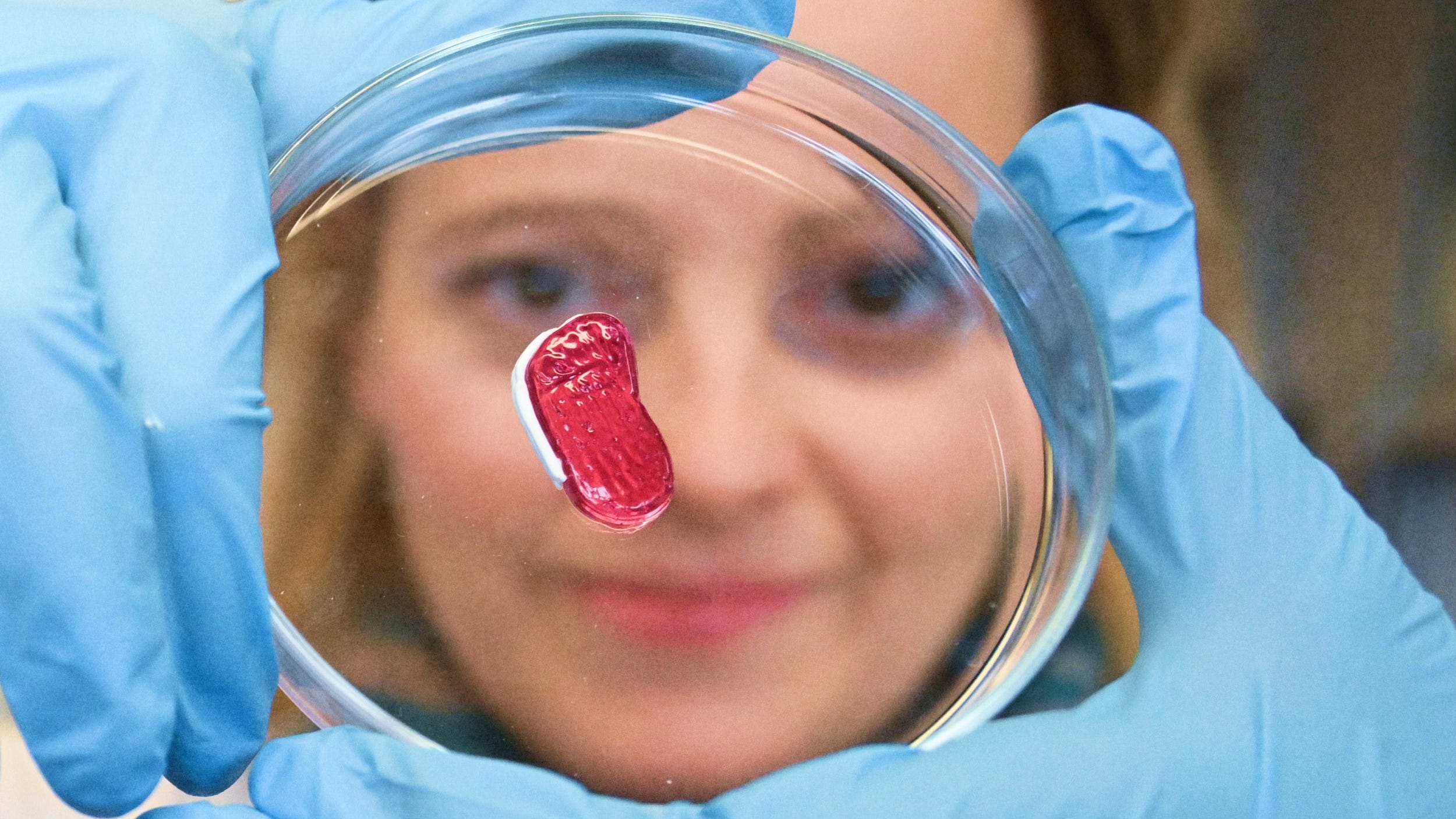
Cultivated meat as a technology coming down in price
Cultivated meat is far enough along in development to provide a better sense of the forward trajectory of bioengineering.
In 2013, about the time when we were getting the CRISPR breakthrough, Dutch scientist Mark Post demonstrated that he could create cultivated meat, also known as cultured meat or lab-grown meat. To make cultivated meat, scientists place cells taken from an animal, such as a cow, in a bioreactor, a vessel that can provide the right environment and conditions for cells to grow and multiply. The end product that comes out of the bioreactor is real meat — not a plant-based product designed to mimic it. Biologically, it is animal muscle tissue grown from animal cells. It’s meat.
The first cultivated meat company was founded in 2015. Now called Upside Foods, it had to figure out how to drive down the cost of Post’s cultivated meat — his first hamburger was bankrolled by Google cofounder Sergey Brin and cost $300,000. Other startups joined the effort, and by 2023, we not only had significantly cheaper cultivated beef prototypes, but also cultivated chicken approved for limited commercial sale in a few restaurants.
The fledgling field of cultivated meat has been up and down, but it’s following the same trend as other technologies: something that starts out scarce and expensive ($300,000) eventually becomes cheap and abundant. It’s not quite there yet, but it could be in the next five years or so.
Why is the development of cultivated meat so important? Total meat consumption, and so production, has been growing aggressively every decade since the 1960s. It turns out that one of the first things any poor person in any region of the world wants to do when they get a bit more income than subsistence is eat meat. As we have pulled more people around the world out of poverty, we’ve increased global meat consumption, too. In the 1960s, the world produced about 70 million tonnes of meat annually. Today the number is close to 350 million tonnes — more than four times higher.
The beef industry has a far larger climate and land footprint than any other major meat category. Producing beef generates up to 10 times more CO2- equivalent emissions than producing pork or chicken. Cattle also emit significant amounts of methane, a far more potent greenhouse gas than CO2, though it dissipates from the atmosphere more quickly.
Beef is one of the most land-intensive foods humans produce — production can require up to 27 times more land than chicken, pound for pound. The more we can shift away from traditional beef production methods, the better for the climate for sure — if we could replace all traditional beef with cultivated meat, produced using clean energy, the impact on the environment would be huge.
“If calculations about the potential scale of cultivated meat are ultimately proven correct, we’d need only 1,650 domesticated cattle to provide all the beef we consume today should the dream of cell-cultivated meat be fully realized,” genetics expert Jamie Metzl wrote in his excellent book Superconvergence. “We’d need only around 2,800 cattle to meet the world’s current estimated animal protein needs for 2050.”
“Because cell-cultured beef is estimated to have the potential to require 95% less land, 96% less feeder crops, and around 65% less water than traditionally raised beef, the savings across the board would be enormous,” Metzl continued. “Because cattle farming today is responsible for an estimated 9.5% of global greenhouse gas emissions, we’d be able to reduce that figure by roughly half.”
The kicker is that none of those 2,800 cattle would need to be slaughtered. You can take the initial cells that start the cultivated meat process from living animals. We could get rid of all slaughterhouses, ending the suffering of those animals, and still enjoy the same great-tasting meat — only better for the environment. That could be one of the first big win-wins of the Bioengineering Age.
Brilliant perspective, Peter. It's reassuring to know that there are other like minded people who care about sustainability, and the future of all life on Earth.
always great stuff, Peter